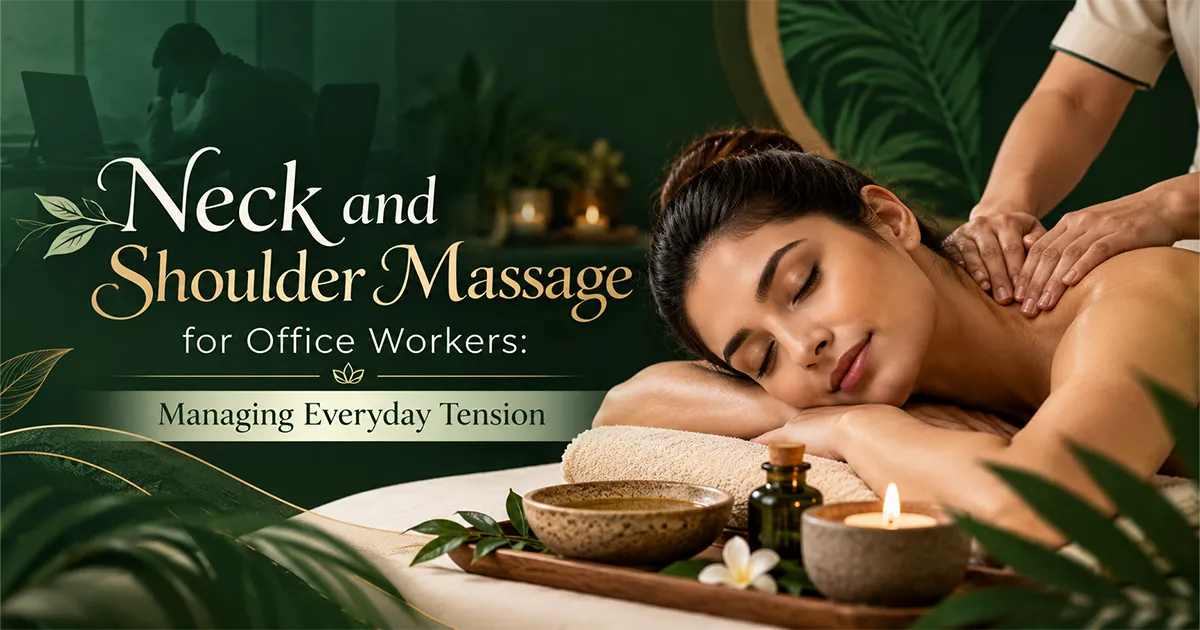
The first sign of a long day at the computer is often a dull ache between the shoulder blades or a neck that feels stiff when you turn your head. Hours spent reviewing documents, attending video calls, and using a mouse can leave the neck and upper back feeling tired, especially when you spend most of the day in one position.
A neck and shoulder massage may help ease some of that discomfort and give you time to relax after work. Some approaches use lighter strokes, while others apply firmer pressure to specific areas. From screen height to the way you hold your shoulders while typing, small details of your workday can affect how your upper body feels. The following sections explain these habits, compare general massage approaches, and cover situations where medical advice is more appropriate.
Working at a computer leaves the neck, shoulders, and arms in much the same position for hours. Even with a supportive chair, staying in one position for long periods can leave the same muscle groups working continuously, which may contribute to fatigue and discomfort.
When you focus on a screen, your head often drifts forward from its natural alignment over your shoulders. This forward head posture makes the neck and upper-back muscles work harder to support the head. After several hours, the muscles around the neck and shoulders may start to feel tired or uncomfortable.
Look at how these everyday habits affect the neck and shoulders:
A neck and shoulder massage focuses on areas that often feel tight after desk work, including the upper trapezius, levator scapulae, and rhomboids. For people experiencing recurring discomfort, massage for neck and shoulder tension may offer temporary relief, depending on the cause of the discomfort and the techniques used.
Key neck massage benefits include:
The best massage for office workers can vary depending on whether they want to relax after work or address tightness around the neck and shoulders. The options below use different techniques and levels of pressure.
Massage Option | What Happens During the Massage | What You May Prefer It For |
Swedish Massage | The therapist uses flowing strokes and gentle kneading. | A lighter session after a long day at work. |
The therapist applies slower, firmer pressure to selected areas. | When you prefer stronger pressure on tight muscles. | |
Thai Massage | The session includes rhythmic pressure and assisted stretches. | If you enjoy stretching as part of a massage. |
Pain Relief Therapy | The therapist concentrates on specific areas using the techniques offered in the treatment. | When you want a particular area of discomfort addressed. |
Someone looking for a relaxing session may prefer gentle strokes, while a person who enjoys firmer pressure may consider a deep tissue treatment. Your preferred pressure and the areas you want addressed can help guide the choice. The therapist should know about any pain, sensitivity, or discomfort before the session begins.
When concentrating on a computer screen, people often lean forward without realising it. Reaching for the mouse or keeping the shoulders raised while typing can add to the strain around the neck and upper back. Along with massage for desk workers, paying attention to these everyday habits can help make long hours at the computer more comfortable.
What Can You Implement at Your Own Level
Massage frequency varies from person to person. Some office workers book a session occasionally to relax, while others consider another appointment based on their comfort, preferences, and budget.
If neck or shoulder discomfort keeps returning, consider discussing it with a healthcare professional rather than simply increasing the number of massage appointments. Regular movement, suitable workstation adjustments, and appropriate clinical care all have a role in managing recurring discomfort.
Sparsh Spa & Salon in Majra, Dehradun, offers several massage options that may interest people who spend long hours at a desk. Visitors can discuss their preferred pressure and the areas they would like the therapist to focus on before choosing a service.
The team can explain the techniques used in each service and help you decide which option to consider.
Massage may be suitable for some forms of everyday muscular discomfort, but it is not appropriate for every cause of neck pain.
Postpone booking a massage and consult a healthcare professional if you experience:
Note: Severe neck stiffness accompanied by a high fever or a sudden, severe headache requires urgent medical attention.
Which massage is best for office workers?
It depends on your pressure preferences. Swedish Massage offers gentler strokes for general relaxation, while deep tissue massage or targeted pain relief therapy applies firmer pressure for localized tightness in the upper back and shoulders.
How can massage help with neck and shoulder tension?
Massage applies manual pressure to muscle groups that feel tight. Some people experience short-term relief from stiffness, although the response varies depending on the cause of the discomfort and the techniques used.
What is the best massage for people who sit all day?
Desk workers often prefer sessions that focus on the upper back, shoulders, and neck. Options range from gentle Swedish massage to firmer deep tissue work or oil-free options, depending on what feels comfortable.
How to relieve neck and shoulder tension after working at a desk?
Arrange your monitor with the top at or slightly below eye level, take short movement breaks every hour, practice gentle stretches, and consider periodic massage appointments if you find them helpful.
Why do office workers experience neck and shoulder stiffness?
Stiffness usually results from keeping the body in fixed positions for long periods, leaning forward toward screens, keeping arms engaged while typing, and holding tension in the shoulders.
How often should office workers get a massage?
There is no set rule. Some people book appointments occasionally for stress relief, while others schedule them based on personal comfort, budget, and response to previous sessions.
When should someone with neck stiffness seek medical advice?
Seek medical advice if neck stiffness occurs alongside radiating arm pain, numbness or weakness in the hands, or if it follows a recent physical injury. Severe stiffness accompanied by a fever or sudden headache requires urgent medical care.
Taking movement breaks and adjusting your workstation can make the working day more comfortable. A massage may also provide time to unwind when the neck and shoulders feel tired.
If you are considering a neck and shoulder massage in Dehradun, contact Sparsh Spa & Salon in Majra to ask about its available treatments. Discuss your preferred pressure and the areas you would like addressed before booking.

Comments are closed